A complete Endocardial cushion defect

A developing embryo has a complete endocardial cushion defect. The foetus develops to full-term and is born at 39 weeks gestation. 1) Describe which septum are missing in this newborn (2 marks); 2) Compare and contrast the blood flow in the developing foetus (1 mark), to that in the newborn, including oxygenation and shunting of blood (1 mark);

3) Describe which side of the heart will have increased blood volume, and how this increased blood volume will impact the heart wall thickness over time (1 mark). Hint: Think about which side of the heart will end up with more blood (i.e. blood volume) as the heart beats, and identify how this increased blood volume will impact the heart tissue growth (i.e. hypertrophy etc.) Key words: Atria, Ventricle, shunt, hypertrophy Use dot points to answer this question *Use dot points

1) Describe which septum are missing in this newborn (2 marks); Interatrial septum 2) Compare and contrast the blood flow in the developing foetus (1 mark), to that in the newborn, including oxygenation and shunting o blood (1 mark); 3) Describe which side of the heart will have increased blood volume, and how this increased blood volume will impact the heart wall thickness over time (1 mark).
The cell membrane is assumed to be permeable to which of the following ions?

When measuring the diffusion potential ofin a nerve cell, the cell membrane is assumed to be permeable to which of the following ions? o––andD All ions

A cell is at equilibrium in an aqueous solution of300mlosmoles of sodium chloride

A cell is at equilibrium in an aqueous solution ofosmoles of sodium chloride. Upon its placement in a Calcium chloride solution ofosmoles, what will be the net movement of fluid? – No change

How do potassium ions travel as they move into the cell?

How do potassium ions travel as they move into the cell?A.Up the concentration gradient and up the membrane potentialB.Down the concentration gradient and up the membrane potentialC.Up the concentration gradient and down the membrane potentialD.Down the concentration gradient and down the membrane potential

Aqueous solutions of different concentration separated by a semipermeable membrane

Consider two aqueous solutions of different concentration separated by a semipermeable membrane. In this situation, osmosis results in: A. water molecules moving to the side where the solution concentration is lower. B. the more concentrated solution becoming even more concentrated. C. the more dilute solution becoming even more dilute. D. the more concentrated solution becomes more dilute.

Formats for Presenting data as visuals

Software advances allow for increasingly varied formats for presenting data as visuals. The US Census Bureau, in fact, maintains a web-based gallery, from which Figure 7.6 was obtained.10 This figure represents an unusual visualization of shifts in occupations; an added call-out highlights the healthcare occupations.

Critique this visual (as well as any others linked through this referenced site). For which audiences would the format be most useful? How might you reconfigure this chart for simpler access to a wider group of readers?”

Human PHYSIOLOGY

Could you please type the answers to see clear .) thank you ! (Human PHYSIOLOGY) Which of these statements are correct and which are incorrect Cotransport always involves Na+ and a non -ionized solute (such as glucose).

2- Cotransporters can move their transported solutes in either direction across a cell membrane.

3- Cotransport consumes metabolic energy directly.

4- Counter-transport always requires Na+ participation.

5- Facilitated diffusion and primary and secondary active transport are all examples of carrier -mediated transport.

6- The energy for secondary active transport comes indirectly from the activity of the Na+, K+ ATPase.


48- Place each of these into its appropriate category.

Facilitated diffusion, Primary active transport , Secondary active transport

1- Coupled transport of glucose and Na+ into cells.

2- Coupled transport of Na+ into cells and K+ out of cells.

3- Movement of glucose from the interstitial fluid into cells.

Breeding plants or pigeons

Which of the following could Darwin and others living at that time have learned from breeding plants or pigeons? A. That genetic information was the only thing that fathers passed to their offspring. B. That it was not possible to predict anything about an offspring if you controlled the mating of its parents. C. That there was a clear relationship between genotype and phenotype. D. That there was a resemblance between parents and offspring at each generation. E. All of the choices would have been easy to learn from breeding.

 Why is the use of proper body mechanics important for the healthcare worker and the patient?

Why is the use of proper body mechanics important for the healthcare worker and the patient? (be specific). Identify each component of the chain of infection and give 1 method for each component that a healthcare professional can use to interrupt the cycle of infection.

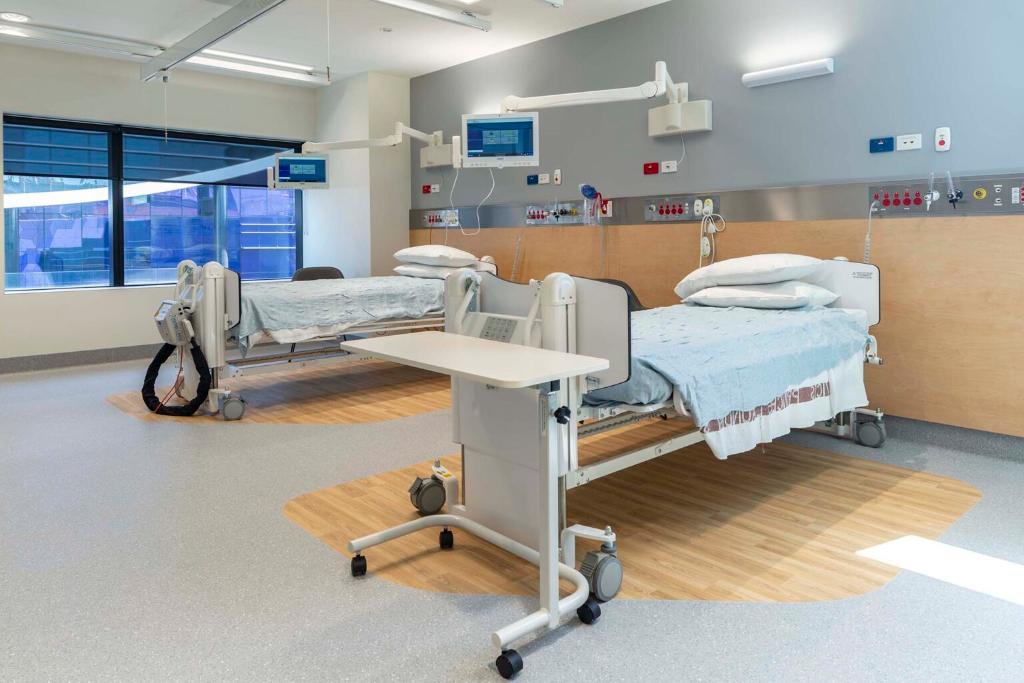
Describe health inequality regarding good hospital environment and bad hospital environment

Describe health inequality regarding good hospital environment and bad hospital environment by illustrating a social, cultural, or environmental determinant of health and outline how this determinant of health insurance’s health status.?

Briefly describe THREE (3) approaches that could be used to improve health status and equity with regards the determinant of health you have portrayed in your photograph and described in question 1.