Parameters for the cost-effective use of healthcare resources

The principal objective of utilization management is the reduction of practice variations by establishing parameters for the cost-effective use of healthcare resources. There are four main techniques or tools used in utilization management: demand management, utilization review, case management, and disease management. Utilization management helps MCOs control costs and improve quality.

Refer to the readings of this week and the Internet on the above information, and answer the following questions:

What are the challenges faced by MCOs regarding practice variations? What do you think can be done to meet these challenges?
Differentiate between the three main processes of institutional utilization management.
Determine the main purposes of each process of institutional utilization management. Which process do you think is the most important, and why?
Research the role of the utilization management nurse.
Explain the functions of the utilization management nurse, and compare and contrast the information from that organization.
Explain your understanding of disease management and case management. What is your opinion are one major similarity and one major difference between the two types of management?
Now, access information on disease and case management by searching the Internet by using the following keywords:

Care Continuum Alliance
Commission of Case Manager Certification
Based on your research, answer the following questions:

What is the purpose or mission of these professional organizations?
What standards do these organizations set for certification or membership?
How do these organizations define disease or case management and do they differ from the text definitions?
Off-label use and dosage of drugs safer for children from infancy to adolescence

Explain the circumstances under which children should be prescribed drugs for off-label use. Describe strategies to make the off-label use and dosage of drugs safer for children from infancy to adolescence. Include descriptions and names of off-label drugs that require extra care and attention when used in pediatrics.

Patient education strategy

Case Study

A 46-year-old, 230lb woman with a family history of breast cancer. She is up to date on yearly mammograms. She has a history of HTN. She complains of hot flushing, night sweats, and genitourinary symptoms. She had felt well until 1 month ago and she presented to her gynecologist for her annual GYN examination and to discuss her symptoms. She has a history of ASCUS about 5 years ago on her pap, other than that, Pap smears have been normal. Home medications are Norvasc 10mg QD and HCTZ 25mg QD. Her BP today is 150/90. She has regular monthly menstrual cycles. Her LMP was 1 month ago.


Post a brief description of your patient’s health needs from the patient case study you assigned. Be specific. Then, explain the type of treatment regimen you would recommend for treating your patient, including the choice of pharmacotherapeutics you would recommend, and explain why. Be sure to justify your response. Explain a patient education strategy you might recommend for assisting your patient with the management of their health needs. Be specific and provide examples.

Chances of acquiring catheter-associated urinary infections

Discuss why the quantitative method is the best method based on your project questions and data. Choose three potential designs that you could use for your project. Based on the three potential designs, determine potential analysis methods and why?

Clinical/PICOT Questions:
Do elderly patients in long-term care (P) that have a urinary Foley catheter that is placed on a Prevention Strategy Urinary Catheter Protocol (I) experience reduced chances of acquiring catheter-associated urinary infections (O) compared to those without (C) within 4 weeks of implementation?

The quality improvement will be based on a perspective that will be carried out on elderly patients in medical/surgical/telemetry. The setting for the study is West Covina, CA 76-bed hospital. The hospital provides care for patients in West Covina and the surrounding communities. The quality improvement project will also be supported by the hospital’s management at all levels. The quality improvement will involve of patients 65 years and older.

Utilization of indwelling urinary catheters

Avoiding unnecessary utilization of indwelling urinary catheters would help in reducing the incidences of catheter-associated urinary tract infections (CAUTI). In an ICU unit, does the use of an indwelling urinary catheter better than intermittent catheter use in the prevention of CAUTI?

Factors that might impact the patient’s diagnosis and treatment

Decision Tree for Neurological and Musculoskeletal

Case study: http://cdnfiles.laureate.net/2dett4d/Walden/NURS/6521/05/mm/decision_trees/week_07/index.html

  • Review the interactive case Study
  • Reflect on the patient’s symptoms and aspects of the disorder presented in the interactive media piece.
  • Consider how you might assess and treat patients presenting with the symptoms of the patient case study you were assigned.
  • You will be asked to make three decisions concerning the diagnosis and treatment for this patient. Reflect on potential co-morbid physical as well as patient factors that might impact the patient’s diagnosis and treatment.


Write a 1- to 2-page summary paper that addresses the following:

  • Briefly summarize the patient case study you were assigned, including each of the three decisions you took for the patient presented.
  • Based on the decisions you recommended for the patient case study, explain whether you believe the decisions provided were supported by the evidence-based literature. Be specific and provide examples. Be sure to support your response with evidence and references from outside resources.
  • What were you hoping to achieve with the decisions you recommended for the patient case study you were assigned? Support your response with evidence and references from outside resources.
  • Explain any difference between what you expected to achieve with each of the decisions and the results of the decision in the exercise. Describe whether they were different. Be specific and provide an example

Generalized Anxiety Disorder

Generalized Anxiety Disorder is a psychological condition that affects 6.1 million Americans, or 3.1% of the US Population. Despite several treatment options, only 43.2% of those suffering from GAD receive treatment. This week you will review several different classes of medication used in the treatment of Generalized Anxiety Disorder. You will examine potential impacts of pharmacotherapeutics used in the treatment of GAD. Please focus your assignment on FDA-approved indications when referring to different medication classes used in the treatment of GAD.

To Prepare

  • Review the Resources for this module and consider the principles of pharmacokinetics and pharmacodynamics.
  • Reflect on your experiences, observations, and/or clinical practices from the last 5 years and think about how pharmacokinetic and pharmacodynamic factors altered his or her anticipated response to a drug.
  • Consider factors that might have influenced the patient’s pharmacokinetic and pharmacodynamic processes, such as genetics (including pharmacogenetics), gender, ethnicity, age, behavior, and/or possible pathophysiological changes due to disease.
  • Think about a personalized plan of care based on these influencing factors and patient history with GAD.


Post a discussion of pharmacokinetics and pharmacodynamics related to anxiolytic medications used to treat GAD. In your discussion, utilizing the discussion highlights, compare and contrast different treatment options that can be used.

Examples of acquired brain injury

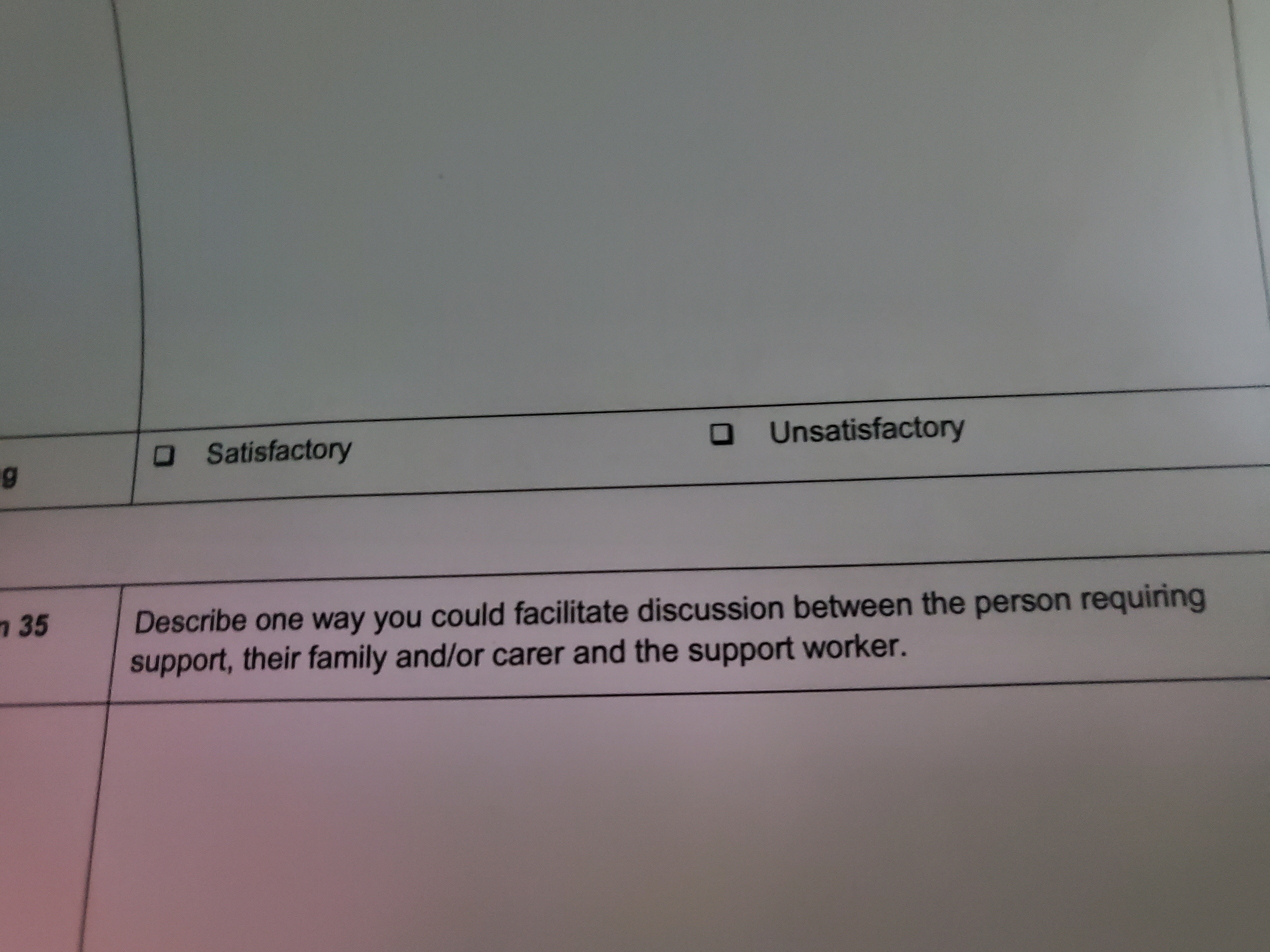
Provide two examples of acquired brain injury and two examples of how you would implement person-centred support to facilitate self-determination and choice.Describe one way you could facilitate discussion between the person requinny

support, their family and/or carer and the support worker.

student submitted image, transcription available

  • Chegg Logo

    Here’s the be

Cardiovascular conditions that may lead to heart failure

Instructions
Evaluate the Health History and Medical Information for Mrs. J., presented below.
Based on this information, formulate a conclusion based on your evaluation, and complete the Critical Thinking Essay assignment, as instructed below.
Health History and Medical Information
Health History
Mrs. J. is a 63-year-old married woman who has a history of hypertension, chronic heart failure, and chronic obstructive pulmonary disease (COPD). Despite requiring 2L of oxygen/nasal cannula at home during activity, she continues to smoke two packs of cigarettes a day and has done so for 40 years. Three days ago, she had sudden onset of flu-like symptoms including fever, productive cough, nausea, and malaise. Over the past 3 days, she has been unable to perform ADLs and has required assistance in walking short distances. She has not taken her antihypertensive medications or medications to control her heart failure for 3 days. Today, she has been admitted to the hospital ICU with acute decompensated heart failure and acute exacerbation of COPD.
Subjective Data
Is very anxious and asks whether she is going to die.
Denies pain but says she feels like she cannot get enough air.
Says her heart feels like it is “running away.”
Reports that she is exhausted and cannot eat or drink by herself.
Objective Data
Height 175 cm; Weight 95.5kg.
Vital signs: T 37.6C, HR 118 and irregular, RR 34, BP 90/58.
Cardiovascular: Distant S1, S2, S3 present; PMI at sixth ICS and faint: all peripheral pulses are 1 ; bilateral jugular vein distention; initial cardiac monitoring indicates a ventricular rate of 132 and atrial fibrillation.
Respiratory: Pulmonary crackles; decreased breath sounds right lower lobe; coughing frothy blood-tinged sputum; SpO2 82%.
Gastrointestinal: BS present: hepatomegaly 4cm below costal margin.
Intervention
The following medications administered through drug therapy control her symptoms:
IV furosemide (Lasix)
Enalapril (Vasotec)
Metoprolol (Lopressor)
IV morphine sulphate (Morphine)
Inhaled short-acting bronchodilator (ProAir HFA)
Inhaled corticosteroid (Flovent HFA)
Oxygen delivered at 2L/ NC
Critical Thinking Essay
In 750-1,000 words, critically evaluate Mrs. J.’s situation. Include the following:
Describe the clinical manifestations present in Mrs. J.
Discuss whether the nursing interventions at the time of her admissions were appropriate for Mrs. J. and explain the rationale for each of the medications listed.
Describe four cardiovascular conditions that may lead to heart failure and what can be done in the form of medical/nursing interventions to prevent the development of heart failure in each condition.
Taking into consideration the fact that most mature adults take at least six prescription medications, discuss four nursing interventions that can help prevent problems caused by multiple drug interactions in older patients. Provide a rationale for each of the interventions you recommend.
Provide a health promotion and restoration teaching plan for Mrs. J., including multidisciplinary resources for rehabilitation and any modifications that may be needed. Explain how the rehabilitation resources and modifications will assist the patients’ transition to independence.
Describe a method for providing education for Mrs. J. regarding medications that need to be maintained to prevent future hospital admission. Provide rationale.
Outline COPD triggers that can increase exacerbation frequency, resulting in return visits. Considering Mrs. J.’s current and long-term tobacco use, discuss what options for smoking cessation should be offered.
You are required to cite to a minimum of two sources to complete this assignment. Sources must be published within the last 5 years and appropriate for the assignment criteria and relevant to nursing practice.

Mandated reporting fact sheet for health professionals

Assignment Description:

Mandated Reporting

Develop a mandated reporting fact sheet for health professionals, a nurse/health ministry, or a community organization whose members are mandated providers in your state.

Identify the target-mandated provider group for which you are developing the fact sheet. Tailor the fact sheet to the group.
Feel free to incorporate feedback provided by your peers as part of the discussion topic response for this module.

The following specifications are required for this assignment:

  • Length: Begin with a title page and a short introduction to the reporting sheet.
  • Structure: Include a title page and reference page (if needed in APA style). Under a level heading, present the mandated reporting fact sheet. Close with a robust conclusion and reference page. References page with at least 3 references for resources utilized in the development of the fact sheet.
  • References: Use at minimum 3 for resources utilized in the development of the fact sheet in APA format.

Additional resources:

Access the Mandatory Reporters of Child Abuse and Neglect publication for an overview of reporting. Follow up with accessing your state website and review the mandatory reporting requirements.