How do potassium ions travel as they move into the cell?

How do potassium ions travel as they move into the cell?A.Up the concentration gradient and up the membrane potentialB.Down the concentration gradient and up the membrane potentialC.Up the concentration gradient and down the membrane potentialD.Down the concentration gradient and down the membrane potential

Aqueous solutions of different concentration separated by a semipermeable membrane

Consider two aqueous solutions of different concentration separated by a semipermeable membrane. In this situation, osmosis results in: A. water molecules moving to the side where the solution concentration is lower. B. the more concentrated solution becoming even more concentrated. C. the more dilute solution becoming even more dilute. D. the more concentrated solution becomes more dilute.

Formats for Presenting data as visuals

Software advances allow for increasingly varied formats for presenting data as visuals. The US Census Bureau, in fact, maintains a web-based gallery, from which Figure 7.6 was obtained.10 This figure represents an unusual visualization of shifts in occupations; an added call-out highlights the healthcare occupations.

Critique this visual (as well as any others linked through this referenced site). For which audiences would the format be most useful? How might you reconfigure this chart for simpler access to a wider group of readers?”

Human PHYSIOLOGY

Could you please type the answers to see clear .) thank you ! (Human PHYSIOLOGY) Which of these statements are correct and which are incorrect Cotransport always involves Na+ and a non -ionized solute (such as glucose).

2- Cotransporters can move their transported solutes in either direction across a cell membrane.

3- Cotransport consumes metabolic energy directly.

4- Counter-transport always requires Na+ participation.

5- Facilitated diffusion and primary and secondary active transport are all examples of carrier -mediated transport.

6- The energy for secondary active transport comes indirectly from the activity of the Na+, K+ ATPase.


48- Place each of these into its appropriate category.

Facilitated diffusion, Primary active transport , Secondary active transport

1- Coupled transport of glucose and Na+ into cells.

2- Coupled transport of Na+ into cells and K+ out of cells.

3- Movement of glucose from the interstitial fluid into cells.

Breeding plants or pigeons

Which of the following could Darwin and others living at that time have learned from breeding plants or pigeons? A. That genetic information was the only thing that fathers passed to their offspring. B. That it was not possible to predict anything about an offspring if you controlled the mating of its parents. C. That there was a clear relationship between genotype and phenotype. D. That there was a resemblance between parents and offspring at each generation. E. All of the choices would have been easy to learn from breeding.

 Why is the use of proper body mechanics important for the healthcare worker and the patient?

Why is the use of proper body mechanics important for the healthcare worker and the patient? (be specific). Identify each component of the chain of infection and give 1 method for each component that a healthcare professional can use to interrupt the cycle of infection.

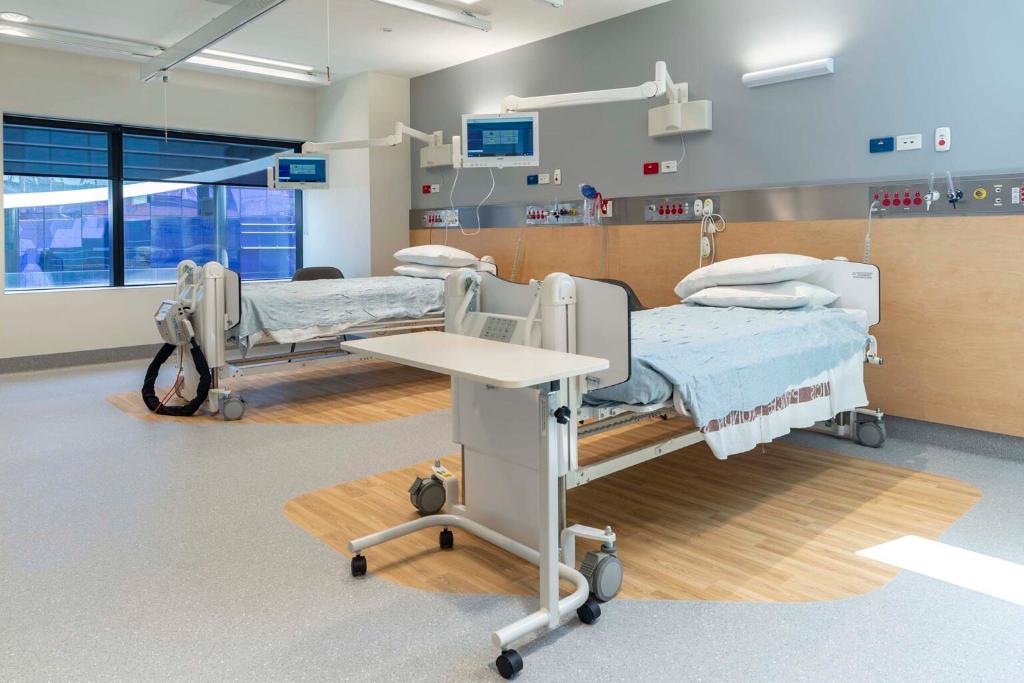
Describe health inequality regarding good hospital environment and bad hospital environment

Describe health inequality regarding good hospital environment and bad hospital environment by illustrating a social, cultural, or environmental determinant of health and outline how this determinant of health insurance’s health status.?

Briefly describe THREE (3) approaches that could be used to improve health status and equity with regards the determinant of health you have portrayed in your photograph and described in question 1.

The capacity to develop an ethical argument

The purpose of this assessment is for students to demonstrate the capacity to develop an ethical argument/s based on the four bio-ethical principles: autonomy, justice, beneficence, and non-maleficence. Students will use their chosen topic to develop a sound ethical argument.

Chosen topic: Childhood immunization should be mandatory in Australia.

In relation to this selected topic: Consider the application of the bioethical principles that have been discussed in the unit.

• Consider the application of ethical theories and other ethical concepts to the chosen topic.

• Based on the evidence, construct a written discussion that clearly presents these ethical considerations and the ethical dilemma/s. You need to discuss both sides of the argument/s.

• Based on the evidence determine and then specify your ethical stance.

• Present your work in a formal academic essay using APA referencing that includes an introduction, discussion, and conclusion

Discuss how the preschooler differs from the toddler in the following areas

Discuss how the preschooler differs from the toddler in the following areas: physical appearance, functioning of body systems, interaction with other children, ability to cope, and play preferences.

Acetylcholine triggers the fusion of synaptic vesicles with the synaptic membranes of the presynaptic cell

Acetylcholine triggers the fusion of synaptic vesicles with the synaptic membranes of the presynaptic cell. This same stimulus also triggers the subsequent endocytosis. o Tru False