Drug abuse and dependence
Define drug use, misuse, and abuse and dependence. Give detailed definitions with specific examples. Explain diseases that may result from dug abuse.Support your response. Do not use the text definition

Define drug use, misuse, and abuse and dependence. Give detailed definitions with specific examples. Explain diseases that may result from dug abuse.Support your response. Do not use the text definition
A 50-year-old woman with an 8-year history of diabetes mellitus presents with difficulty controlling her blood sugars for the past 2 weeks. Her self-monitoring blood glucose readings have been in the 200s–300s for 2 weeks. She has managed her type 2 DM with diet, exercise, and metformin 1,000 mg twice a day. Her last glycosylated hemoglobin (HgbA1c) level, which was measured 2 months ago, was 6.8%. She has had asthma since age 18. She felt her asthma was getting worse for the past 6 months as she was having increased dyspnea and dry cough. She has managed her asthma with a daily combined long-acting beta-2 adrenergic agonist, an inhaled corticosteroid, and montelukast. She also uses her short-acting beta-2 adrenergic agonist, albuterol, about once a day. She went to her pulmonologist about 2 months ago and was diagnosed with severe asthma. A decision was made to start her on oral prednisone (corticosteroid). The first month she took 5 mg a day with some relief, but the symptoms returned, so her prednisone dose was increased to 10 mg a day. She has been taking the 10 mg dose for 3 weeks. She says her breathing is better, but she feels increasingly tired and like she is gaining weight. See chapter 8 on respiratory function. Physical examination reveals an anxious woman with blood pressure of 144/92 mmHg, pulse of 90, respiratory rate of 20, and weight of 190 pounds. She is talking in full sentences. Lung sounds are clear bilaterally. No accessory muscles are being used. No cyanosis is present.
1.Which of the following is the most likely cause of this patient’s loss of glucose control? Explain actions important for this patient to learn regarding glucocorticoid therapy, but which is the most important?
2. Explain which endocrine conditions is this patient at risk of developing. Given this patient’s acute loss of glucose control, which intervention would be required?
Explain what it takes for a nursing practitioner to get a furnishing license and what are the steps to achieving this license in your state of practice. What is the time line? What forms need to be submitted? What are the practice requirements and when are they to be completed?
The researchers recruited participants with Parkinson’s Disease as case and those without Parkinson’s Disease as control. Interviews were conducted to study the exposure to caffeine. Two hundred and twenty-five patients with Parkinson’s Disease were recruited for the study (100 in the case group and 125 in the control group); 48 in the group with Parkinson’s Disease were exposed to caffeine. Thirty-eight participants in the control group were exposed to caffeine.
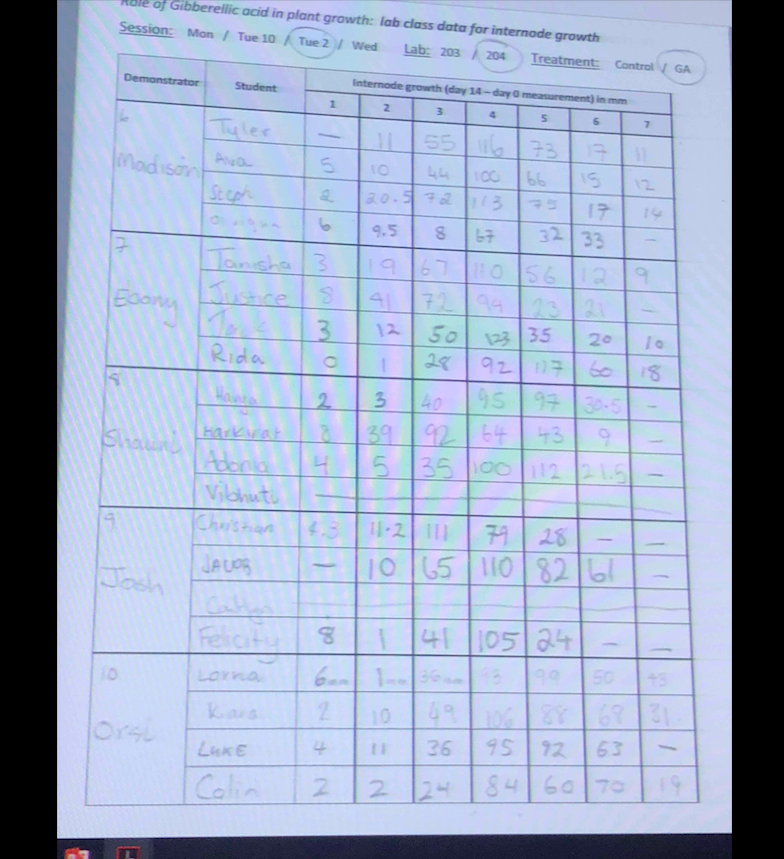
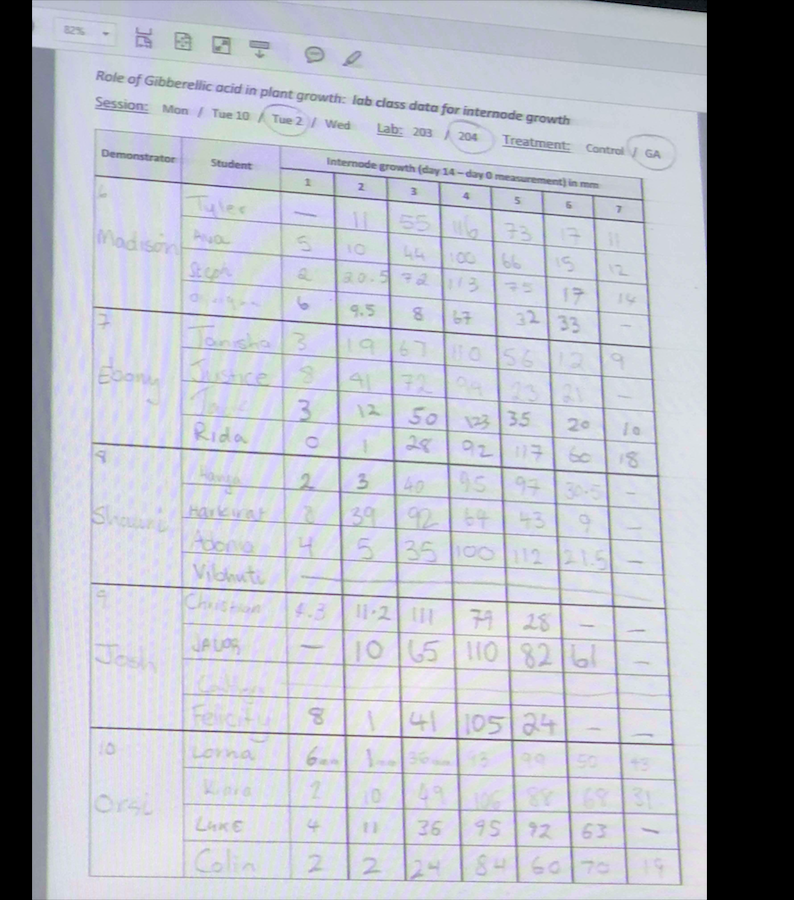
The Role of Gibberellic Acid in Plant Growth Aim: To study the effect of the gibberellic acid application on plant growth. To do this you will set up control and treatment plants. Control plants will be sprayed with water and treatment plants with gibberellic acid (GA) Plants: Your group will use two pots each containing a seedling of Pisum sativum variety William Massey, which is a dwarf variety. The dwarf plants are deficient in gibberellic acid (GA) due to mutation of a gene in the pathway for biosynthesis of GA. Procedure 1. As much as possible, your two plants should match for height. 2. The plant in the square pot will be the control (C) and the plant in the round pot the treatment 3. Label each plant and pot with the appropriate information. Use a pencil for writing labels (pencil does not run/wash off). Using stickers, label the pots with your prac day & time and the seat no. for one member of your group. Using jeweler’s tags label the plants either C or T, depending on pot shape 4. Carefully measure internode length in millimetres. The first internode is the distance between the first node (where the cotyledons were attached) and the second node where the membranous scale leaves are attached. The second internode is the distance between the second node (where the membranous scale leaves are attached) and the third node where the first trifoliate leaf is attached. You may need to use a Vernier caliper if internodes are small. See Appendix I for how to use Vernier calipers. Note, there should be three to four internodes 5. Record the measurements for each plant’s internode length separately in Table P1.1 (next page) under Day 0. If you do not have measurements (i.e. for internodes not yet present) put zero
How has media impacted society? Provide some examples. How does media influence celebrity status? How does it help or hinder the celebrity/fan relationship? What’s the difference between celebrity worship and celebrity stalking? What are the social norms involved?
Consider the cyclic AMP second-messenger system a) Where in the cell is the receptor located that detects the first messenger? b) When the receptor binds to the first messenger, what type of protein does it initially activate? c) What molecule acts as the second messenger? d) Does the first messenger exist in the intracellular space or extracellular space? e) Does the second messenger exist in the intracellular space or extracellular space? f) What molecule is converted into cAMP? What enzyme catalyzes the production of cAMP? The second messenger binds to and activates what sort of protein? What does this protein do? i) Explain where signal amplification occurs in this cascade of events? j) The second messenger eventually is broken down into what molecule?
Compare and contrast amino acids and nucleic acids. The answer could be one or the other, both, or neither.
a. Which contains nitrogen?
b. Which contains a sugar in its monomer?
c. Which forms peptide bonds?
d. Which can form hydrogen bonds?
Identify five important components used for the Pediatric Basic Screening Survey when assessing a child’s oral health status
a. A 6 month dental recare appointment
Sealant on permanent molars
Presence of treated decay
A fluoride vanish treatment
A child’s first visit to the dentist
Presence of untreated decay
Early childhood caries presence
The urgency of need for dental care
