Discuss how the  ANA Code of Ethics guides you in decision-making during times of philosophical differences in healthcare

Discuss how the  ANA Code of Ethics guides you in decision-making during times of philosophical differences in healthcare and policymaking.

Discuss the critical and ethical role as well as the responsibility of all nurses to advance policy for quality

Discuss the critical and ethical role as well as the responsibility of all nurses to advance policy for quality, safety, access to healthcare, and advancement of the profession.

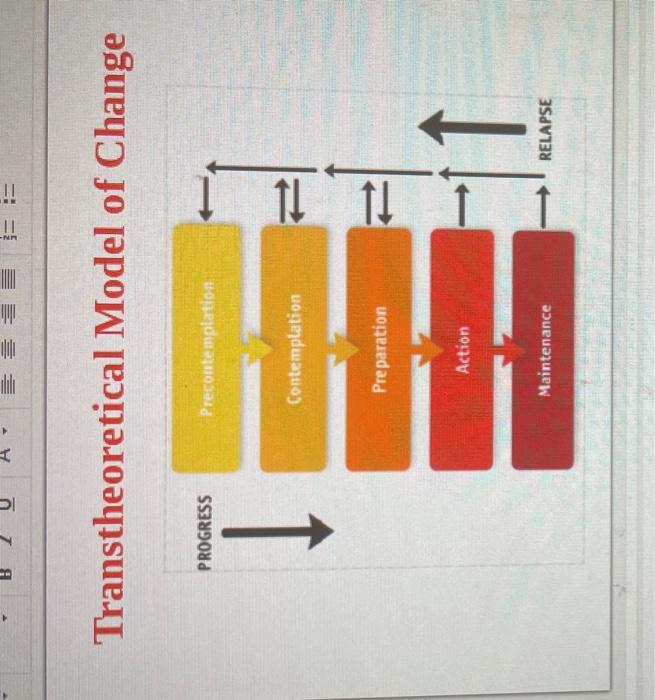
The Transtheoretical model

Please explain to me the transtheoretical model, using a hypithetical habit the person is trying to change and few things the person would be thinking/doing in the different stages

Transtheoretical Model of Change

S

How does the diaphysis will grow in width?

Select all the correct statements. How does the diaphysis will grow in width? Osteoclasts remove bone in the medullary cavity Osteoclasts add compact bone to the outer layer of the diaphysis Osteoblasts remove bone in the medullary Osteocytes add compact and spongy bone creating more bone tissue Hyaline cartilage is replaced by bone pushing the epiphyses away from the diaphysis Osteoblasts add compact bone to the outer layer of the diaphysis

What Anatomical features do spongy and compact bone tissue have in common?

What anatomical features do spongy and compact bone tissue have in common? Select all the correct answers. A central canal with blood vessels and a nerve Hydroxyapitite minerals Lamellae with osteocytes in lacunae Collagen fibers Osteoblasts and osteoclasts at the edges of trabeculae Space between bone tissue filled with marrow Chondrocytes in lacunae surrounded by a thick extracellular matrix

Raspnoodle is a Neurotransmitter (NT)

Raspnoodle is a neurotransmitter (NT). When raspnoodle is bound to the binding site on the receptor, a channel protein in a completely different part of the membrane opens to allow sodium ions to move down their electrochemical gradient. You would classify raspnoodle receptors as:

A. metabotropic.

B. ionotropic.

C. inhibitory.

D. EPSPs.

Kindly explain in a paragraph what is FEEDBACK CONTROL in ENZYMES

Answer in your own words please, don’t copy from the internet. thank you. Kindly explain in a paragraph what is FEEDBACK CONTROL in ENZYMES.

To inspect for Sifety hazaras

Choose a home (apartment, condo) to inspect for sifety hazaras. it can be your owm home but ensure there is enough to insped to make this siugnonent a worthwhile learning experience for you. Include the folowing in your inpection: Approximate age of the home: Styie of the home ftwo-story, one floor cendo, etcl. Number of persons living in the home?

Ages of the persons living in the home: Number of working fire extinguisherspresent in the home. Number of smoke detectors present in the home. Number of warking carbon monqidde detectan present in the bome: Electrical, gas, of hot water iressient he tir s nourue: Gax of electric stoves and ovens: First aid kit in home: 0 Yes Dl No fo marks:

2. Complete a tharoueh inepection of each room of the home indudist brieitient, taundry soom, and garege, if opplicable, euting the falsores.

A Diagnosis of lead poisoning

A ten-year-old boy is brought to his primary care physician. His parents report he has a decreased ability to pay attention and recently he is suffering from underperformance in school.The primary care physician provides the boy’s parents with a diagnosis of lead poisoning. They have recently moved into a house that was built prior to 1965.

1.Describe the mechanism by which cellular damage occurs in lead poisoning. Be sure to discuss the major body systems that can be injured by lead poisoning and the manner in which this injury occurs. Support your answer with data, facts, key terminology, specific examples, and other examples.

A Standardized checklist for hand overs of care between units?

The Wrong Patient. Does the clinical site have a standardized checklist for hand overs of care between units? Do they include a checklist patient identification and the plan of care?

A 67-year-old woman (Patient 1) was admitted through the interventional radiology service for a cerebral angiography. Following the angiography, the patient was transferred to the oncology floor instead of returning to her original bed in the telemetry unit. The next morning, the patient was mistakenly taken for an invasive cardiac electrophysiology (EP) study. Approximately 1 hour into the procedure, it became apparent that she was the wrong patient.

The series of events that led to this wrong patient incident:

A 77-year-old woman (Patient 2) was admitted to the telemetry unit to undergo the EP study. This patient’s name was similar to Patient 1’s name.

When the EP nurse called for Patient 2, the telemetry unit nurses confused the two patients’ names and mistakenly told her that Patient 2 had been moved to the oncology floor.

The oncology nurse took Patient 1 to the EP lab even though there was no written order in the chart and the patient said she was not aware of the plans for this procedure.

The EP fellow decided to proceed even though there was no consent form and a lack of pertinent information in the chart. He discussed the procedure with Patient 1 and obtained consent.

The neurosurgery resident making rounds did not find Patient 1 in her bed and was told she was in the EP lab. He assumed the attending physician had ordered the procedure.

The EP attending arrived but could not see the patient’s face because her head was draped, so he assumed this was Patient 2.

The EP charge nurse noticed that Patient 1’s name did not match any of the names on the morning log. She assumed that the patient had been added after the schedule was distributed.


An interventional radiology attending went to Patient 1’s room and discovered her missing. He called the EP lab and informed them of the error. The procedure was stopped and Patient 1 was returned to her room.

What do you think is the key takeaway from this case study?