Label the anatomical components of the olfactory pathway

Label the anatomical components of the olfactory pathway. Olfactory bulb Olfactory mucosa Olfactory nerves Olfactory tract 0.5 pts 1 Label the superficial structures of the tongue. Circumvallate papillae Foliate papillae Fungiform papillae 0.5 pts Label the structures of the membranous labyrinth. Cochlear duct Saccule Semicircular ducts Utricle 0.5 pts
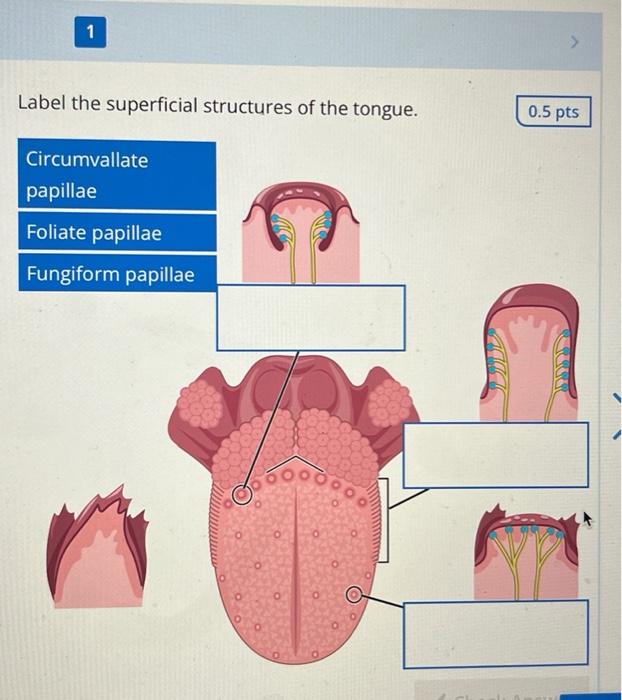
1 Label the superficial structures of the tongue. Circumvallate papillae Foliate papillae Fungiform papillae 0.5 pts

10 Rules Of Negotiation

10 Rules Of Negotiation: Name the Rule with the description given. We have 2 ears, 2 eyes and 1 mouth, so we should use them in proportion. Ears and eyes 80% of the time and a mouth 20% of a time. Because if you speak less it is harder to break the rules.
Don’t split the product into smaller parts. Because they may start choosing what they want to buy. Sell a total offer. You give them the total price and tell what it is.
No matter how friendly you are. Never tell them how far you could have been pushed. That is dangerous, because you change a win-win situation into lose-win.
Sell to the problem. They make a decision based if they are willing to pay x amount of money for that solution.
If you can avoid it. Other person puts their stake on the ground. It may be better then you expected. You reveal to much about yourself or you may lose the deal after all.
Because, if he is good negotiator, then he has something good behind. If he is not a professional, then he has is negotiating with himself already and has something better coming. So there is always a better offer coming. Not always in money, but a better offer.
Make sure in negotiation if they want something from you get something in return. It may be also a information. Make sure they work for it.
1) Today’s offer is a starting point. Free gift: a 10% discount. But the next time they already start with 10% deal.
2) Next time they want discount as well. So they take additional 10%
Everyone walks away from a deal thinking could/should I have done better. So you need to ask 3 questions:
1) If I am about to make extra 10 days credit – What does it actually cost me?
2) What is it worth for other guy?
3) So if I know what does it cost me and how for him – how much I get? Ex. If I offer a solution that cost me 10 dollars, then I should get back something from him what is worth 10 dollars.
We all have tendency to lose a bit of a confidence. Ex: what is the other guy thinking? What price do I ask? Set a figure you want and stick do it, before the negotiation. Works at both cases: buying or selling
People have time scale. You recognize when they start to speed up. Don’t look it as closing deal. They want your stake out, so that they get an advantage. Get back, find out the value for them and offer equal cost for it.

Observable Properties of matter

Describe the “observable properties of matter”, according to: Line, Shape and Form, Space, Texture, Value and Light, Color, Movement, Repetition, Variety, Rhythm, Balance, Compositional Unity, Emphasis, Economy, and/or Proportion. Say something about your chosen work using most of these categories–and others that may seem appropriate to the medium.

Mathew Paris 1200-1259

The Sodium-potassium pump

How are potassium ions typically moved out of a neuron when the membrane is at rest? (a)the sodium-potassium pump moves potassium ions out of the cell. (b) Potassium ions are stable and do not move when a membrane is at rest. Chemical gradients move potassium ions out of the cell. (d) Electrical gradients move potassium ions out of the cell. 10. During an AP scoliosis x-ray the patient has re- ceived a radiation dose of 3 mGy into his breast, gonads and stomach.

What is the total effective dose? Note that Wt(breast) – 0.05, Wt(gonads) :0.2, Wt(stomach) = 0.12. (a) 0.32 mSv (b) 0.0035 mSv (c) 56mSv (d) 0.96 mSv E

The horizontal distance between any two Successive wave crests

Decreases 7. Ocean waves are also described by their wavelength, the horizontal distance between any two successive wave crests (or successive wave troughs). You can approximate wavelengths on the Wave Analyzer by using the distance scale shown along the right side of the viewing window. Imagine yourself on the deep water boat, with the Wave Analyzer set at time 0 and a wave crest off the boat’s bow.

Run the video until the next wave crest arrives off the boat’s bow and then stop it. Measure the distance between the two successive wave crests. Recall, the scale is in 10-m intervals. The distance measured indicates the wavelength of the passing deep-water wave was approximately m. Record this wavelength in the top deep-water section on the Wave Characteristics Table. a. 25 b. 55 c. 95 tional and shallow-water

Successive wave troughs

Decreases 7. Ocean waves are also described by their wavelength, the horizontal distance between any two successive wave crests (or successive wave troughs). You can approximate wavelengths on the Wave Analyzer by using the distance scale shown along the right side of the viewing window.

Imagine yourself on the deep water boat, with the Wave Analyzer set at time 0 and a wave crest off the boat’s bow.

Run the video until the next wave crest arrives off the boat’s bow and then stop it. Measure the distance between the two successive wave crests. Recall, the scale is in 10-m intervals.

The distance measured indicates the wavelength of the passing deep-water wave was approximately m. Record this wavelength in the top deep-water section on the Wave Characteristics Table. a. 25 b. 55 c. 95 tional and shallow-water

Many Fermentations

In many fermentations it is necessary to obtain a maximum amount of biomass, therefore, the amount of mass that can be obtained is limited by the volume of cells, these occupy a finite volume and have a rigid shape, so they cannot pack more than
a certain limit.

There will always remain a certain amount of water in the interstitials between
adjacent cells, even if they have the volume of hollows that in most cases
can reduce up to 40% of the volume of the fermenters. Calculate the maximum cell mass
on a dry basis that can be obtained for each liter of fermenter if the density
of wet cells is 1.1 g/cm3. Cells are composed of 75% water and 25%
solids. (cell mass is seen as dry weight in the fermentation industry)

The refractory period of a muscle is

The refractory period of a muscle is: the time period when a muscle can respond to a second stimulus the time period when the muscle will not respond to a second stimulus the time period between the contraction phase and relaxation phase time from the moment of stimulation until the muscle shortens none of the above 1 points

Abraham’s trust in God

Abraham is James’ first example. He is referring to Genesis 22. Read this story again, then read Hebrews 11:17. Does this story demonstrate Abraham’s trust in God? (Yes or No?)

Describe the mechanism of controlling aldosterone release as described in your text.

Describe the mechanism of controlling aldosterone release as described in your text.