The Energy system use

Steve is a collegiate soccer player. He plays mid-field; there are periods of short sprints, continues movement, and jogging. Answer the following regarding the energy system use. 1. Outline the energy systems being used during a 1.5-hour game.

a. Short sprints b. Continues movement c. Runs (30 seconds to 1 minute) 2. What are the primary and secondary nutrients he is using during the game? What is the reason for this? 3. Steve often feels tired and fatigued during the game. He says he feels he “hits a wall.” What would you tell him could be the possible reason for this and what would you advise him to do to keep him from “hitting the wall
 Neurons of the Sympathetic nervous system

Neurons of the sympathetic nervous system blank 1 (increase/decrease) heart rate, and neurons of the parasympathetic nervous system blank 2 (slow it down/make is faster). In general, the blank 3 nervous system takes care of “rest- and-digest” activities, and the blank 4 nervous system helps support exercise or emergency actions-the so-called “fight-or-flight” responses.

Which of the following decreases the Myocardial contractility?

Which of the following decreases the myocardial contractility? Select all that apply. Partial credit for each correct answer. Copying/sharing/reproducing in any manner is prohibited. (c) Dr. Shahnaz Kanani Norepinephrine Acidosis Decreased preload Epinephrine Sympathetic stimulation

Tore ligaments in the cervical and scapular regions

Jennie Dip fell off her motorcycle and tore a nerve in her axillary region. She also tore ligaments in the cervical and scapular regions and broke the only bone of her right brachial region. Explain where each of her injuries is located.

Low Thyroid hormone levels in the blood

Patient X tends to be cold and have very low energy. You are an endocrinologist, and you first determine that X has low thyroid hormone levels in the blood. Your next step is to determine whether the problem lies at the level of the hypothalamus, anterior pituitary or the thyroid gland.Assume that you determine that the problem is very low secretion of TSH by the anterior pituitary, despite adequate levels of TRH. Describe two possible causes of this problem, and how you could gather evidence for those causes.

Assume that you can take small pieces of X’s anterior pituitary gland, keep it alive in a dish, and measure what you need to measure.

4. Possible cause #1 for low secretion of TSH by the anterior pituitary despite adequate TRH: (1 pt) 5. Experimental evidence that would support this cause: (1 pt) 6. Possible cause #2 for low secretion of TSH by the anterior pituitary despite adequate TRH: (1 pt) 7. Experimental evidence that would support this cause: (1 pt)


Please help with 4-7!!

Chronic arterial insufficiency

You are caring for a patient diagnosed with chronic arterial insufficiency. Based on your observation, write a report on the following: · Techniques of inspection, palpation, and auscultation used · Three specialized tests used in assessment (Manual compression, Trendelenburg, Allen’s) · Findings obtained from the assessment · Nursing diagnoses associated with chronic arterial insufficiency

The Concentration of glucose in the blood

True/False: Mark the following statements as true () or false (F). If the statement is false, correct it to make it a true statement. a. Glucagon triggers actions that raise the concentration of glucose in the blood. b. The thyroid gland produces thyroxine, triiodothyronine, and parathyroid hormone.

c. The thymus gland produces hormones that regulate the metabolic rate. d. Aldosterone triggers actions that raise the concentration of calcium ions in the blood.

e. The posterior pituitary produces oxytocin and antidiuretic hormone.

Modified Postsynaptic sympathetic neurons

Which of the following organs consists of modified postsynaptic sympathetic neurons? a. Anterior pituitary. b. Parathyroid glands. c. Adrenal cortex. d. Adrenal medulla. Matching: Match the following hormones with their main action(s).

A. Triggers uterine contraction and milk ejection Cortisol

B. Promotes maturation of T lymphocytes Calcitonin

C. Promotes sleep in response to a low light level Thymosin D. Main hormone of the stress response Growth hormone

E. Promotes sperm cell production, greater bone and muscle mass, Oxytocin

F. Stimulates muscle development and longitudinal bone growth Antidiuretic hormone

G. Decreases blood calcium ion concentration Melatonin. Stimulates the retention of water from the kidneys Testosterone

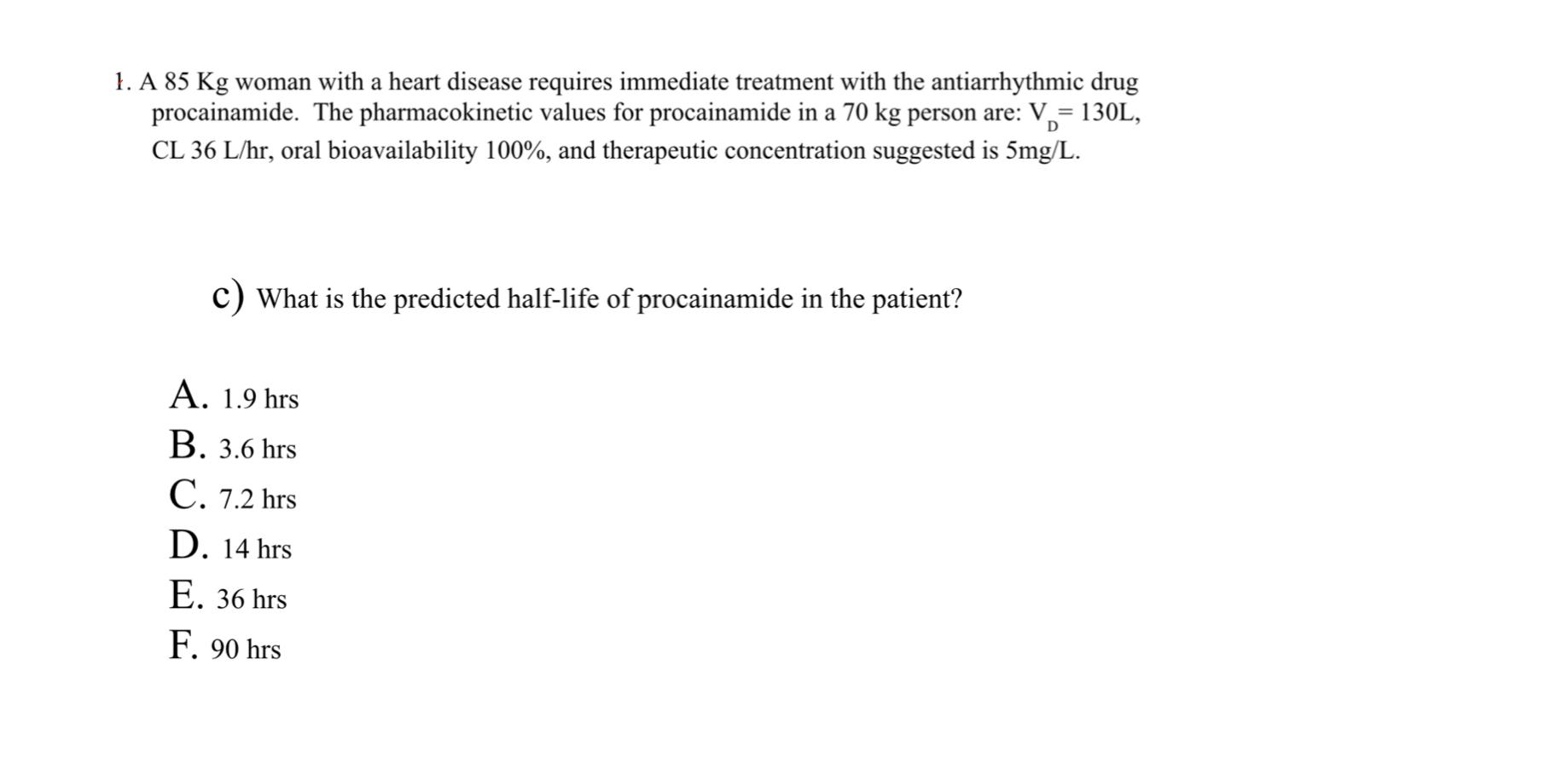
The Antiarrhythmic Drug Procainamide

A \( 85 \Mathrm{Kg} \) Woman With A Heart Disease Requires Immediate Treatment With The Antiarrhythmic Drug Procainamide. The Pharmacokinetic Values For Procainamide In A \( 70 \Mathrm{~Kg} \) Person Are: \( \Mathrm{V}_{\Mathrm{D}}=130 \Mathrm{~L} \), CL \( 36 \Mathrm{~L} / \Mathrm{Hr} \), Oral Bioavailability \( 100 \% \), And Therapeutic Concentration

This problem has been solved!

You’ll get a detailed solution from a subject matter expert that helps you learn core concepts.

1. A \( 85 \mathrm{Kg} \) woman with a heart disease requires immediate treatment with the antiarrhythmic drug procainamide.

S

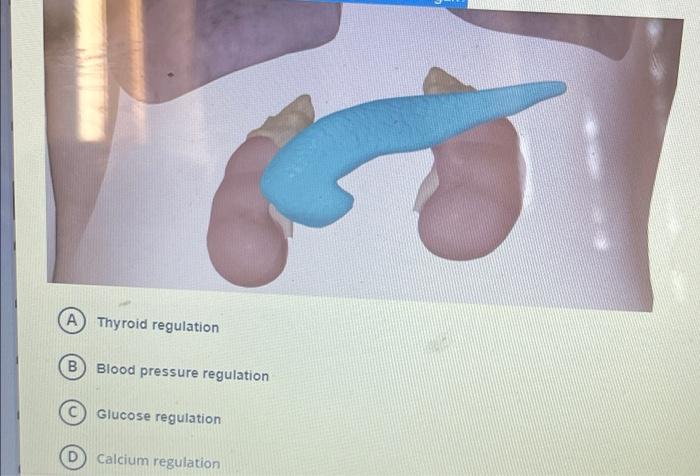
The primary function of the highlighted Endocrine organ

That is the primary function of the highlighted endocrine organ?

Thyroid regulation Blood pressure regulation Glucose regulation Calcium regulation

Show transcribed image text