The current Acute coronary syndromes (ACS) guidelines

Background: The current acute coronary syndromes (ACS) guidelines state ” Supplemental oxygen should be initiated only if the patient has breathlessness, hypoxemia (SpO2<94%), or signs of heart
failure and shock.” (Level IV evidence ANZCOR Guideline 14.2, 2016)
Question: Please respond to the following question referring to the rbric when formulating your
response
Discuss the published evidence in regard to oxygen therapy of the compromised myocardium (as in
ACS). Would you change or maintain the oxygen administration therapy reported in both Mr Hertz
and Mika’s management? Explain

To investigate one of three neurological diseases: multiple sclerosis, Parkinson’s disease or Epilepsy

Task 1 requires you to investigate one of three neurological diseases: multiple sclerosis, Parkinson’s disease or epilepsy and write aword response about this disease. You can choose which disease you focus your assignment on and you need to undertake some reading and research for this assignment. You should use anatomy and physiology textbooks,

-peer reviewed articles and/or reputable online sources (e.g. government health websites, medical or specialist association websites).

– This workshop assignment requires more time investment than workshop 1 as you need to search, locate and review information relating to your selected disease. You will not find the disease information in your canvas modules however your understanding of the nervous system from the Module material is essential for a strong response in this assignment.

– You are required to answer the following 3 questions in your response (ensure you remain focused on these 3 questions as writing irrelevant information not related to these questions will result in a loss of marks).

1. Describe the symptoms of the disorder 2. What are the structural and/or functional changes that happen to the nervous system in this disorder? 3. How do these changes lead to the symptoms observed? – Your written response needs to address the 3 questions and be written in academic language with correct spelling and grammar to attract full marks.

The quality of your writing will also contribute to your marks so ensure you invest time in structuring your response. Your assessors will also be looking to see you have completed the questions with accuracy. – You can structure this assignment by writing a separate response to each question OR you may choose to write one extended response covering all 3 questions.

– We do not require in text citations and referencing for this assignment, BUT you should write your answers in full sentences and in your own words AND list the resources you consulted in the space provided in question 2.

Your listed resources do not need to be in strict APA or Harvard referencing formatting – rather ensure you include enough information about the book/website that would allow your assessor to locate and check the resource.

It is expected you will consult 3 resources to inform your responses to this assignment. – The first part (symptoms) should not be more that 100 words. Parts 2 and 3 can be up to 400 words. Concise and succinct written responses will attract higher marks. – We suggest you draft your response in word and complete editing and finalisation and then copy and paste into canvas.

To investigate one of three neurological diseases: multiple sclerosis, Parkinson’s disease or epilepsy

Task 1 requires you to investigate one of three neurological diseases: multiple sclerosis, Parkinson’s disease or epilepsy and write aword response about this disease. You can choose which disease you focus your assignment on and you need to undertake some reading and research for this assignment. You should use anatomy and physiology textbooks,

-peer reviewed articles and/or reputable online sources (e.g. government health websites, medical or specialist association websites).

– This workshop assignment requires more time investment than workshop 1 as you need to search, locate and review information relating to your selected disease. You will not find the disease information in your canvas modules however your understanding of the nervous system from the Module material is essential for a strong response in this assignment.

– You are required to answer the following 3 questions in your response (ensure you remain focused on these 3 questions as writing irrelevant information not related to these questions will result in a loss of marks).

1. Describe the symptoms of the disorder 2. What are the structural and/or functional changes that happen to the nervous system in this disorder? 3. How do these changes lead to the symptoms observed? – Your written response needs to address the 3 questions and be written in academic language with correct spelling and grammar to attract full marks.

The quality of your writing will also contribute to your marks so ensure you invest time in structuring your response. Your assessors will also be looking to see you have completed the questions with accuracy. – You can structure this assignment by writing a separate response to each question OR you may choose to write one extended response covering all 3 questions.

– We do not require in text citations and referencing for this assignment, BUT you should write your answers in full sentences and in your own words AND list the resources you consulted in the space provided in question 2.

Your listed resources do not need to be in strict APA or Harvard referencing formatting – rather ensure you include enough information about the book/website that would allow your assessor to locate and check the resource.

It is expected you will consult 3 resources to inform your responses to this assignment. – The first part (symptoms) should not be more that 100 words. Parts 2 and 3 can be up to 400 words. Concise and succinct written responses will attract higher marks. – We suggest you draft your response in word and complete editing and finalisation and then copy and paste into canvas.
To investigate one of three neurological diseases: Multiple sclerosis, Parkinson’s disease or epilepsy

Task 1 requires you to investigate one of three neurological diseases: multiple sclerosis, Parkinson’s disease or epilepsy and write aword response about this disease. You can choose which disease you focus your assignment on and you need to undertake some reading and research for this assignment. You should use anatomy and physiology textbooks,

-peer reviewed articles and/or reputable online sources (e.g. government health websites, medical or specialist association websites).

– This workshop assignment requires more time investment than workshop 1 as you need to search, locate and review information relating to your selected disease. You will not find the disease information in your canvas modules however your understanding of the nervous system from the Module material is essential for a strong response in this assignment.

– You are required to answer the following 3 questions in your response (ensure you remain focused on these 3 questions as writing irrelevant information not related to these questions will result in a loss of marks).

1. Describe the symptoms of the disorder 2. What are the structural and/or functional changes that happen to the nervous system in this disorder? 3. How do these changes lead to the symptoms observed? – Your written response needs to address the 3 questions and be written in academic language with correct spelling and grammar to attract full marks.

The quality of your writing will also contribute to your marks so ensure you invest time in structuring your response. Your assessors will also be looking to see you have completed the questions with accuracy. – You can structure this assignment by writing a separate response to each question OR you may choose to write one extended response covering all 3 questions.

– We do not require in text citations and referencing for this assignment, BUT you should write your answers in full sentences and in your own words AND list the resources you consulted in the space provided in question 2.

Your listed resources do not need to be in strict APA or Harvard referencing formatting – rather ensure you include enough information about the book/website that would allow your assessor to locate and check the resource.

It is expected you will consult 3 resources to inform your responses to this assignment. – The first part (symptoms) should not be more that 100 words. Parts 2 and 3 can be up to 400 words. Concise and succinct written responses will attract higher marks. – We suggest you draft your response in word and complete editing and finalisation and then copy and paste into canvas.

A list of your 15 Fully constructed practice terms

Make a list of your 15 fully constructed practice terms the lecture, with the format as follows: 1.PrefixWord RootSuffixDefinition For example: 1. hypo/derm/icpertaining to below the skin When you have your list, take a look at the last 3 terms the ones you built entirely on your own. Look up the term you were trying to construct, either in your book or online.
Did you construct it correctly? Does the official term use a different word part than one you chose? If you got part or all of a word incorrect, do not change your terms to match. Just extrapolate in your discussion why you think the official medical term is constructed in that manner, instead of the way you chose.

To investigate Multiple sclerosis

To investigate multiple sclerosis ~500 word response about this disease.You are required to answer the following 3
questions in your response (ensure you
remain focused on these 3 questions as
writing irrelevant information not related to
these questions will result in a loss of
marks).
1. Describe the symptoms of the disorder
2. What are the structural and/or functional
changes that happen to the nervous system
in this disorder?
3. How do these changes lead to the symptoms
observed?
these questions needs to be answered in
academic language and for the 1st question it cant be more than 100 words,regarding q2,q3 it needs to be in the 400 words range.
thanks

The Provision of sexual health advice and services to young people

Miranda is a registered nurse, who is currently working for Queensland Health at a family planning clinic in the south side of Brisbane. Miranda’s job includes the provision of sexual health advice and services to young people who attend the clinic.

One day on the job, Miranda was asked to see Katy, a 15 year old female who is regarded a generally very sensible girl, intelligent and positive in her outlook. She attended the clinic during a drop in session so that she could obtain sexual and reproductive health advice.

As the discussion unfolded, it became apparent to Miranda that Katy is engaging in sexual activity very regularly with many different partners. When questioned about this further, Katy became agitated stating she was simply seeking some advice about safe sex.

Miranda provided Katy with information regarding sexually transmitted infections and the ways to reduce the risk of contracting such infections. Miranda asked Katy whether she was using using any protection, at which point Katy burst into tears and said “What difference does it make now? Dad’s been doing it to me for years at home.”

When Miranda tried to seek more information, Katy said “Please don’t tell anyone about that or anything else I’ve told you.” After Katy left the clinic, registered nurse Miranda notices that Katy’s emergency contact details list her mother. Miranda wonders if she should tell Katy’s mother what Katy divulge to her about her sexual activity. She is also unsure whether she needs to take further action about what Katy has said goes on at home.

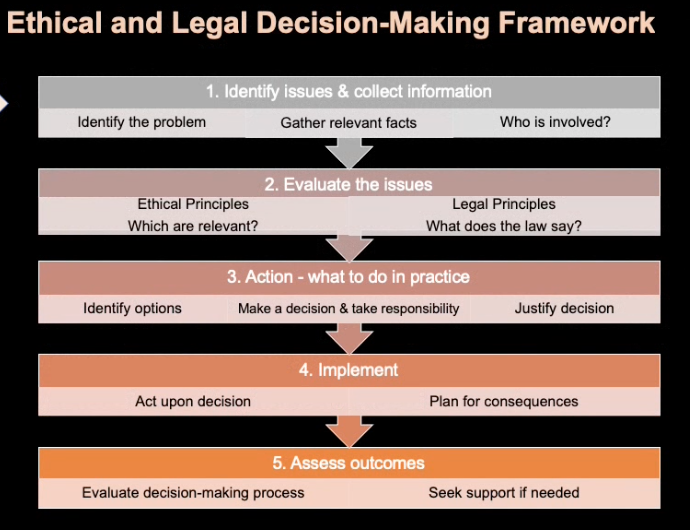
Apply the ethical and legal decision-making framework, step-by-step (shown in Figure 1 below), to explore and answer this scenario.

NOTE: If referencing to a particular case, include the full reference for the case (for e.g Donoghue vs Stevenson [1932] AC 562) and if referencing to a particular legislation, include the full reference for the legislation (for e.g. Coroners Act 1958 (Qld)) and include the specific section.

Ethical and Legal Decision-Making Framework 4. Implement Act upon decision Plan for consequences 5. Assess outcomes Evaluate

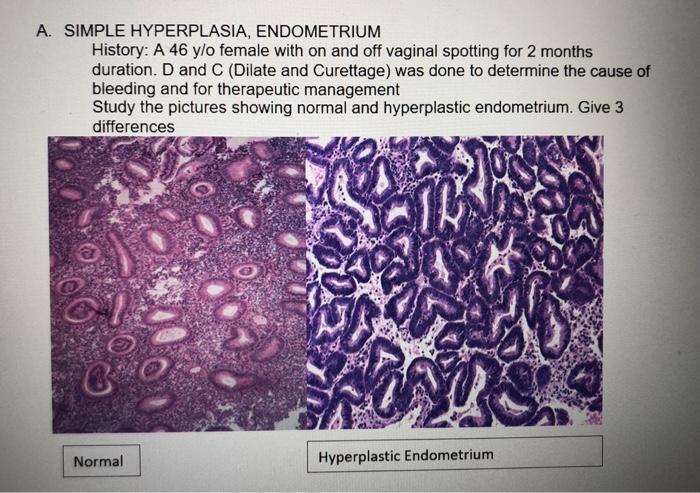
Female with on and off Vaginal spotting

SIMPLE HYPERPLASIA, ENDOMETRIUM History: A 46 y/o female with on and off vaginal spotting for 2 months duration. D and C (Dilate and Curettage) was done to determine the cause of bleeding and for therapeutic management Study the pictures showing normal and hyperplastic endometrium. Give 3 Niffaranana

ASAP PO THANK YOU!

A. SIMPLE HYPERPLASIA, ENDOMETRIUM History: A 46 y/o female with on and off vaginal spotting for 2 months duration. D and C (

Sh

SQUAMOUS METAPLASIA

SQUAMOUS METAPLASIA, CERVIX History: a 48 y/o female with atypical cells on Pap’s smear. Studv the nicturns chnwing Normal and Pathologic. Give 3 differences

ASAP PO THANK YOU!

D. SQUAMOUS METAPLASIA, CERVIX History: a 48 y/o female with atypical cells on Paps smear. Studv the nicturns chnwing Normal

S

Neurological examination

Roger presents to the neurologist as he is experiencing some loss of balance, weakness and ‘funny feeling’ in his face, body, arms and legs. Neurological examination reveals the following (examination findings have been numbered for easy identification in your written responses).

test finding 1: Loss of fine touch sense on right side of body below neck (includes right upper and lower limbs)

test finding 2: Loss of ability to distinguish hot and cold on right side of body below neck (includes right upper and lower limbs)

test finding 3: Loss of pain and temperature sense on left side of face

test finding 4: Weakness/loss of strength in right upper limb, right lower limb and right trunk muscles. Facial muscles are not experiencing weakness or problems on either side.

Consider the information above and answer the following questions. Ensure you clearly state which question is being answered in your entered responses. Answers should be written clearly and concisely and in your own words. Bullet points are suitable for listing key points.

Which specific neuroanatomical structure might be affected that would explain EACH test finding? You should include a brief justification statement with your listed structure for each test finding.

What does the tests findings tell you about WHERE (in terms of anatomical area) the lesion/problem is most likely to be located? You need to consider sensory and motor pathways to answer this question.

Given your responses to above – where is the problem/lesion likely to be located that explains ALL the provided tests findings?