Modified Postsynaptic sympathetic neurons

Which of the following organs consists of modified postsynaptic sympathetic neurons? a. Anterior pituitary. b. Parathyroid glands. c. Adrenal cortex. d. Adrenal medulla. Matching: Match the following hormones with their main action(s).

A. Triggers uterine contraction and milk ejection Cortisol

B. Promotes maturation of T lymphocytes Calcitonin

C. Promotes sleep in response to a low light level Thymosin D. Main hormone of the stress response Growth hormone

E. Promotes sperm cell production, greater bone and muscle mass, Oxytocin

F. Stimulates muscle development and longitudinal bone growth Antidiuretic hormone

G. Decreases blood calcium ion concentration Melatonin. Stimulates the retention of water from the kidneys Testosterone
The Antiarrhythmic Drug Procainamide

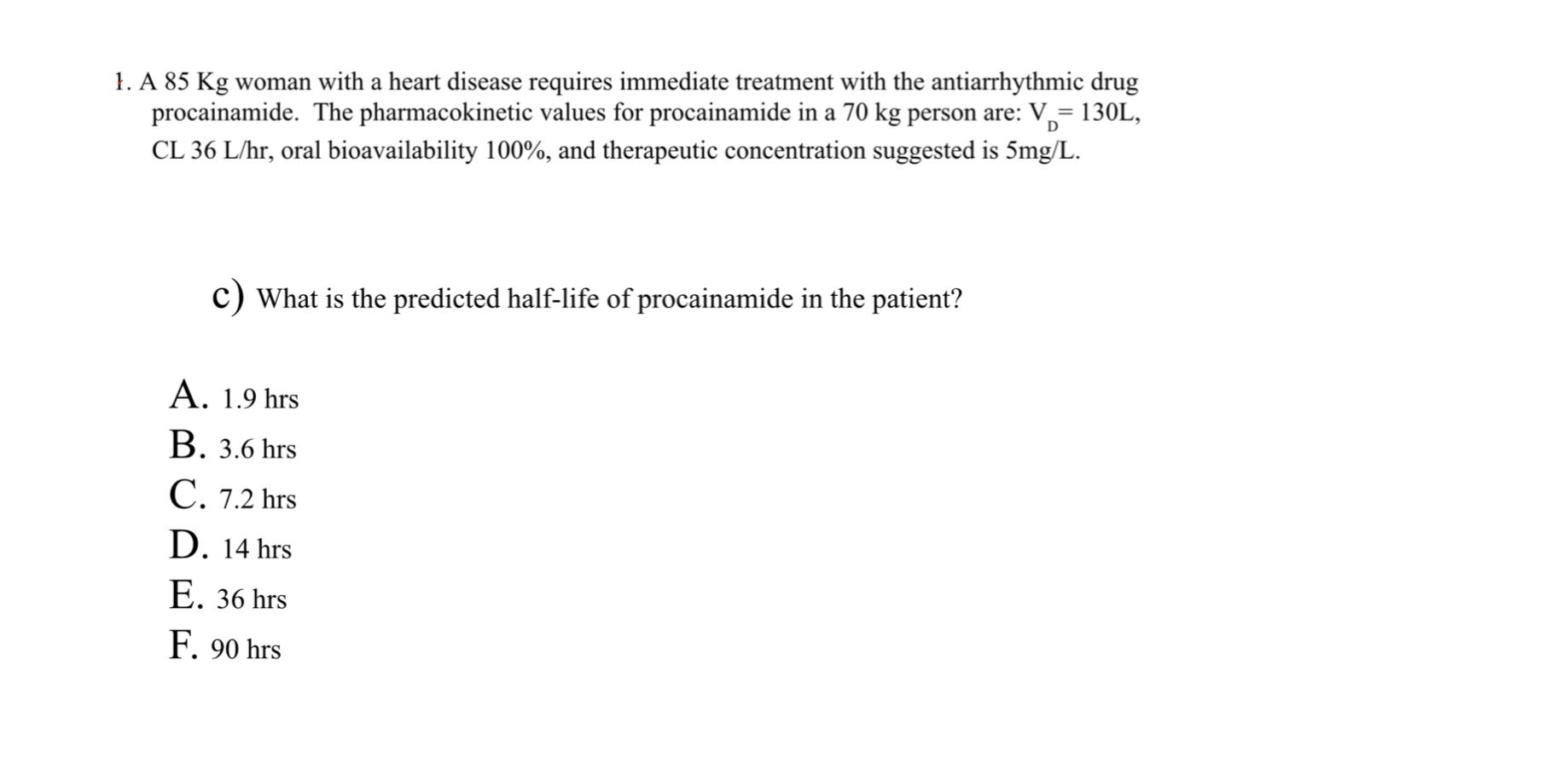
A \( 85 \Mathrm{Kg} \) Woman With A Heart Disease Requires Immediate Treatment With The Antiarrhythmic Drug Procainamide. The Pharmacokinetic Values For Procainamide In A \( 70 \Mathrm{~Kg} \) Person Are: \( \Mathrm{V}_{\Mathrm{D}}=130 \Mathrm{~L} \), CL \( 36 \Mathrm{~L} / \Mathrm{Hr} \), Oral Bioavailability \( 100 \% \), And Therapeutic Concentration

This problem has been solved!

You’ll get a detailed solution from a subject matter expert that helps you learn core concepts.

1. A \( 85 \mathrm{Kg} \) woman with a heart disease requires immediate treatment with the antiarrhythmic drug procainamide.

S

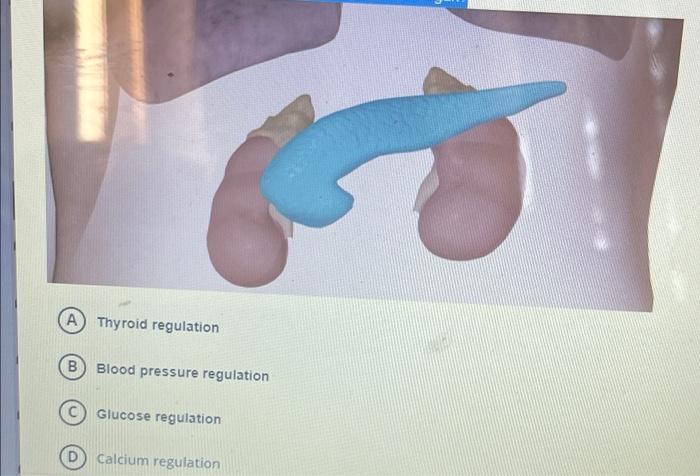
The primary function of the highlighted Endocrine organ

That is the primary function of the highlighted endocrine organ?

Thyroid regulation Blood pressure regulation Glucose regulation Calcium regulation

Show transcribed image text

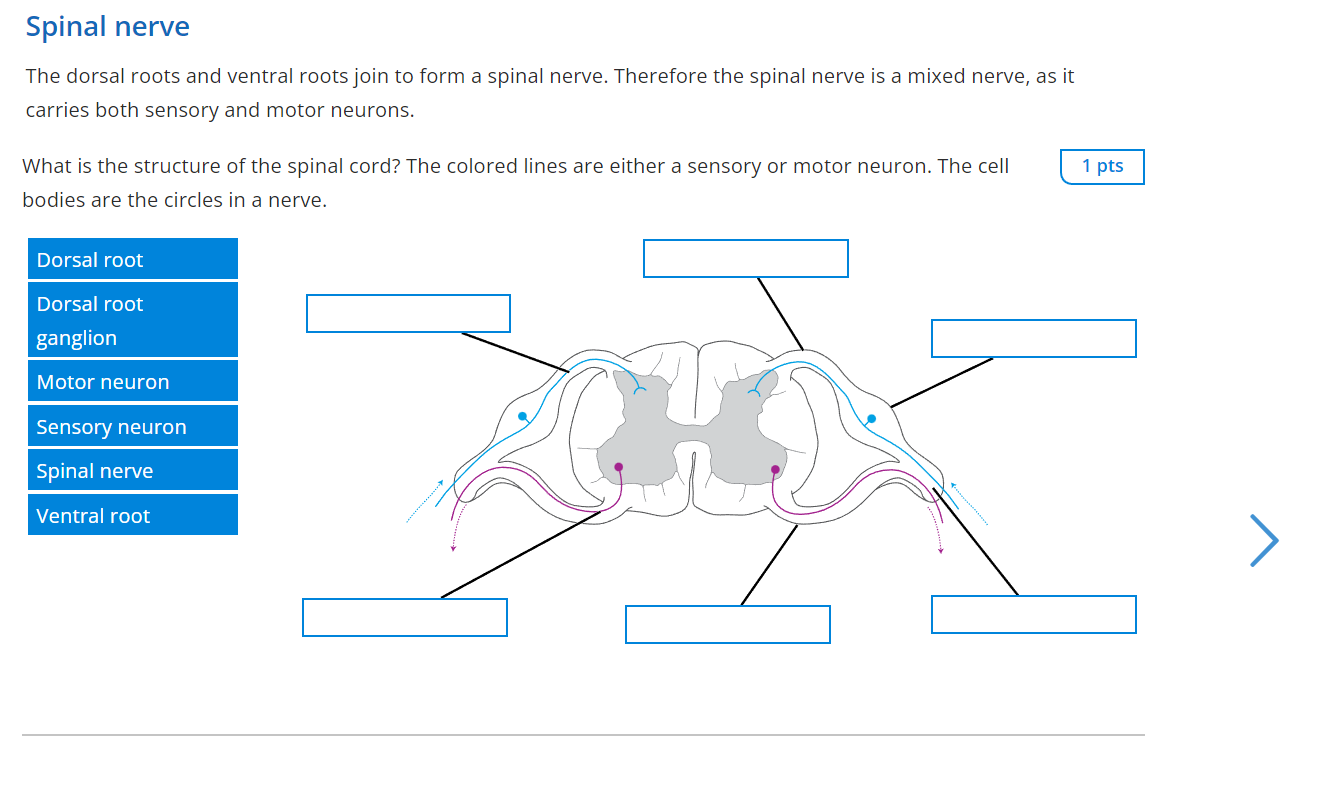
What is the Structure of the spinal cord?

Spinal nerve The dorsal roots and ventral roots join to form a spinal nerve. Therefore the spinal nerve is a mixed nerve, as it carries both sensory and motor neurons. What is the structure of the spinal cord? The colored lines are either a sensory or motor neuron. The cell bodies are the circles in a nerve.

expert that helps you learn core concepts.

Spinal nerve The dorsal roots and ventral roots join to form a spinal nerve. Therefore the spinal nerve is a mixed nerve, as


Planning an Exercise training routine for an athiete

Shetevical actwities require ATP. When planning an exercise training routine for an athiete, the routine should help the athlete maximize adaptations in the enerily s vetems that fuel their major event or sport. Watch this video, consider the time it takes to complete the event and then respond. What type of activities (acrohic vs anaerobicl and prolongedvs, short (seconds to 45 minutes) must coaches include during a training session for an athlete.

who competes in B00-meter races? Provide the rationale or fustification as to why include those type of activities and the energy system that provides ATP during the octivity. Guidelines eventisis, etei

The Surface of erythrocytes

Which antigens are present on the surface of erythrocytes of the following blood types? a
AB

b
O
+

c.
O

d
A
+

A person with typeO+ blood has which of the following Antibodies?

A person with type+ blood has which of the following antibodies? (Assume the person has been exposed to Rh antigens.) a. Anti-A antibodies. b. Anti-B antibodies. c. Anti-Rh antibodies. d. No antibodies.

9 When matching a donor and recipient for a blood transfusion, we are concerned with the

a. donor’s antigens and the recipient’s antigens.

b. donor’s antigens and the recipient’s antibodies.

c. donor’s antibodies and the recipient’s antibodies.

d. donor’s antibodies and the recipient’s antigens. Why do blood banks ask people with type O- blood to donate, if they are able?

Fluid/Electrolyte & Acid-Base Balance

Pick 2 of the bulleted prompts below to write about in this week’s reflection. Unit 10 – Fluid/Electrolyte & Acid-Base Balance. Discuss normal body water content in the fluid compartments and electrolyte composition/movement between the fluid compartments.

  • Explain the regulation of water balance within the body.
  • Explain the roles and regulation of electrolytes and electrolyte balance within the body.
  • Explain the regulation of Acid-Base balance within the body.
  • Discuss 4 homeostatic imbalances of fluid and electrolytes and what is occurring physiologically in a person with the condition.

The Acute Respiratory Care Unit of UMMC

You are an advanced-level RRT working in the Acute Respiratory Care Unit of UMMC with pulmonologist Jessica Spano, MD. Your patient is Dr. John Carter, a 56-year-old white retired manager of Wal-Mart, who is known to have COPD and is on continual oxygen by nasal prongs.

He has smoked two packs a day for his adult life. Last night, he was unable to sleep because increased shortness of breathe and cough. His cough produced yellow sputum. He has to sit upright in bed to be able to breathe. VS are T 101.6 F, P 98, R 36, BP 150/90. On examination, he is cyanotic and frightened and has nasal prongs in his nose. Air entry is diminished in both lungs, and there are crackles at both bases.

You have been ordered to draw blood for ABGs and to measure the amount of air entering and leaving his lungs by using spirometry.

  1. What is your profession? D
    1. Nurse b. physical therapist c. physician d. respiratory therapist


  1. What is another name for nasal “prongs”? A
    1. Cannula b. ventilator c. respirator d. intubation


  1. The medical term for “shortness of breath” is
    1. Tachypnea b. Apnea c. Dyspnea d. Eupnea


  1. The yellow sputum is indicative of?
    1. Asthma b. Bacterial infection c. Atelectasis d. Pleurisy


  1. Cyanosis may indicate
    1. Decreased oxygen in the blood
    2. He has a barrel chest
    3. Increased heart rate
    4. Increased carbon dioxide in the blood
  2. An ABG comes from C
    1. Pleural fluid b. exhaled air c. arterial blood d. sputum analysis

The Plasma membranes of target cells

A hormone exerts its effects by a. binding to receptors on the plasma membranes of target cells and triggering a change inside the cell. b. binding to receptors in the cytosol of target cells and triggering a change inside the cell, c. binding to the glycocalyx and triggering cell-cell adhesion. d. Both a and b are correct. e. Both a and care correct.